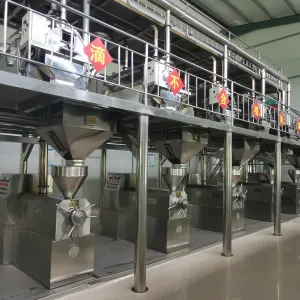
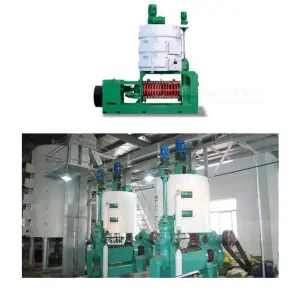
When scaling up your sunflower oil production, selecting the correct mill isn’t just about capacity—it’s about aligning equipment performance with your business goals. Whether you're a small processor aiming for consistent quality or a large manufacturer optimizing throughput, understanding how different models impact efficiency, durability, and ROI is essential.
According to industry benchmarks from the International Oilseed Processing Association (IOPA), most manufacturers start with 5–10 kg/hour for small-scale operations using semi-automatic systems. These units typically feature manual feeding, basic filtration, and low automation—ideal for startups or niche markets where flexibility matters more than speed.
For mid-sized processors (e.g., family-run mills in India or Eastern Europe), 20–50 kg/hour capacity machines are common. These often include automated shell removal, temperature-controlled pressing, and integrated oil separation—all boosting output while reducing labor costs by up to 35% compared to manual setups.
Large-scale facilities (like those in Argentina or Ukraine) may require 100+ kg/hour units. Here, full automation—including PLC control, self-cleaning filters, and real-time yield monitoring—can increase daily output by 40% and reduce energy consumption per liter of oil by 18%, based on case studies from Chinese OEMs like Jining Kexin Machinery.
| Production Level | Typical Capacity | Automation Level | Avg. Energy Use per Liter |
|---|---|---|---|
| Small | 5–10 kg/h | Semi-auto | ~0.8 kWh/L |
| Medium | 20–50 kg/h | Auto + PLC | ~0.6 kWh/L |
| Large | 100+ kg/h | Fully Auto | ~0.5 kWh/L |
While carbon steel offers cost savings upfront, stainless steel (especially 304-grade) ensures better hygiene, corrosion resistance, and compliance with EU/US food safety standards. A 2023 study by Food Engineering Journal found that stainless steel mills had 27% fewer maintenance issues over 2 years—critical for long-term operational uptime.
Moreover, modern designs now integrate smart sensors that monitor temperature, pressure, and flow rate during extraction, leading to higher oil yields (up to 92% vs. 85% in older models). This means less waste, faster processing, and improved return on investment—even if the initial purchase price is slightly higher.
In a comparison between two similar sunflower oil mills—one semi-automatic (carbon steel) and one fully automatic (stainless steel)—a Turkish processor reported a 29% drop in labor hours after switching. Despite a 15% higher capital cost, payback occurred within 8 months due to increased consistency and reduced spoilage losses.
If you’re facing bottlenecks in your current process—whether it's inconsistent oil quality, slow throughput, or high downtime—knowing which machine fits your scale can make all the difference.
Ready to optimize your sunflower oil production?
Get a Free Equipment Assessment & ROI Calculator