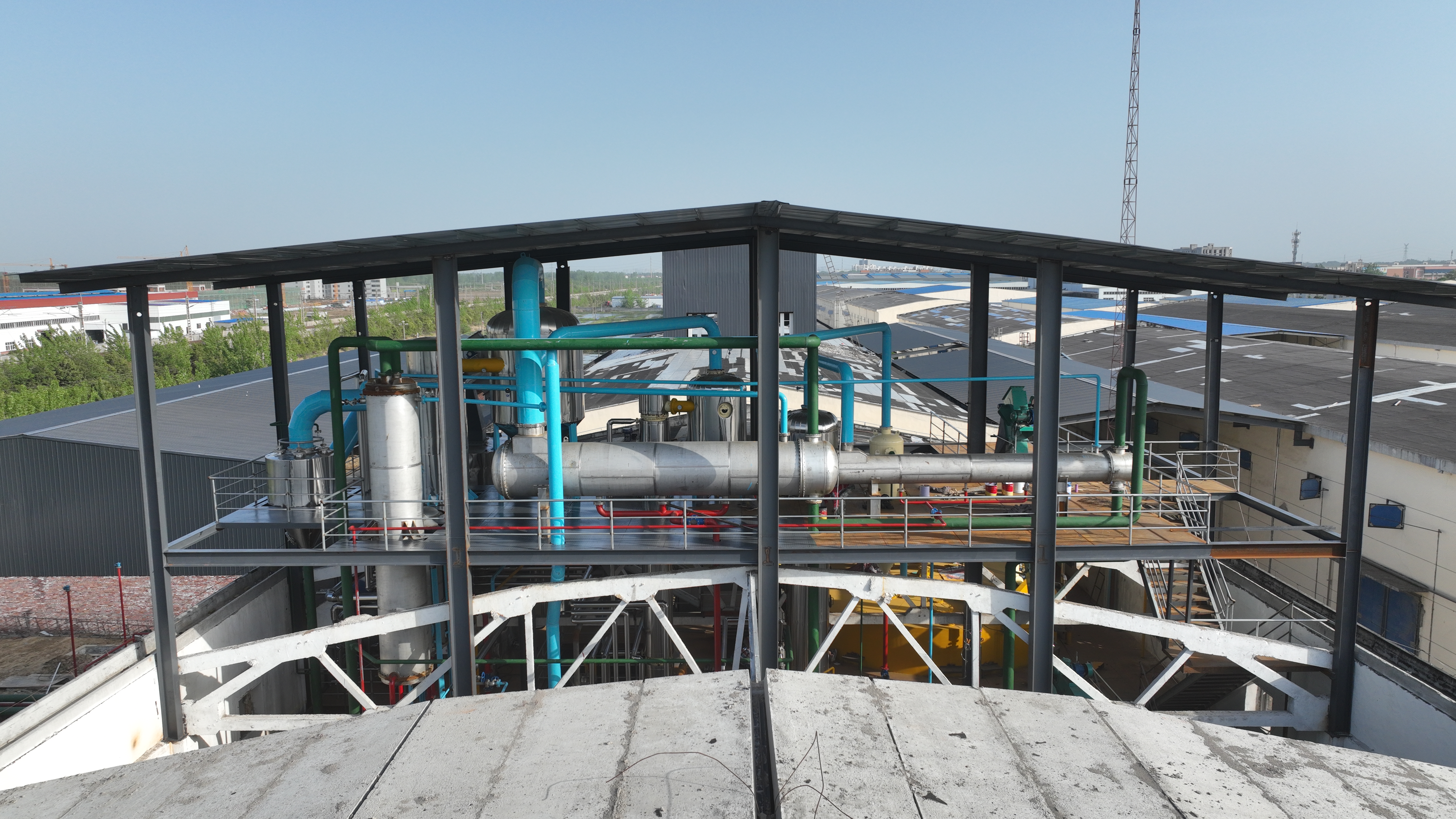
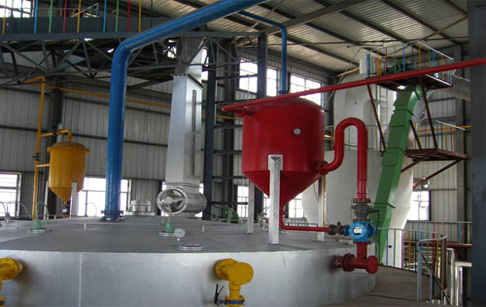
Sunflower Oil Filtration Equipment Selection: Vacuum Filter vs Plate and Frame Filter Press
2026-03-16
QI ' E Group
Technical knowledge
This article provides a technical, decision-focused comparison of two mainstream sunflower oil filtration solutions—vacuum oil filters and plate and frame filter presses. It evaluates their differences in filtration efficiency, energy consumption, operating stability, maintenance complexity, and throughput scalability across typical commercial applications. Designed for oil mill owners and procurement decision-makers, it clarifies selection logic for food-grade, cosmetic-grade, and small-workshop production needs. A practical decision-tree model based on production volume, target oil clarity, solids load, and labor cost helps readers match equipment to real operating constraints, reduce oversizing and downtime risk, and achieve consistent, cost-efficient oil purification. The analysis is supported by structured data tables, workflow diagrams, and real-world selection cases to prevent common purchasing pitfalls and improve overall process reliability.
For sunflower oil producers, filtration is not a “nice-to-have” step—it is the gatekeeper of clarity, shelf-life, and downstream process stability. Yet many purchasing teams still compare machines only by name or initial capacity claims. This guide examines two mainstream options—vacuum oil filter and plate & frame filter press—through measurable indicators: filtration efficiency, achievable micron rating, oxygen exposure risk, energy use, maintenance workload, and scalability.
Written for oil mill owners, engineering teams, and procurement decision-makers, it also introduces a practical decision-tree model based on throughput, oil quality targets, and labor cost realities—so equipment fits operations instead of forcing operations to fit equipment. Brand reference: 企鹅集团.
1) The Filtration Job in Sunflower Oil: What “Good” Looks Like in B2B Production
Most commercial sunflower oil lines encounter a mix of suspended solids (meal fines), phospholipid-related haze precursors, soaps (if neutralization is present), and trace moisture. Buyers in food, cosmetics, and ingredient distribution often translate these risks into requirements such as:
Clarity / turbidity: commonly targeted below 5–20 NTU depending on grade and packaging intent.
Particle control: typical final filtration in the 1–10 μm range for premium applications; 10–25 μm for standard bulk.
Moisture and air exposure management: reduced oxygen pickup helps protect flavor stability and oxidative shelf-life.
Process uptime: stable differential pressure (ΔP) and predictable cleaning cycles matter as much as absolute micron rating.
In procurement terms, filtration equipment should be evaluated as a system: pump + heater (if used) + filter media + cake discharge method + CIP/cleaning method + operator time.
2) How a Vacuum Oil Filter Works (and Where It Wins)
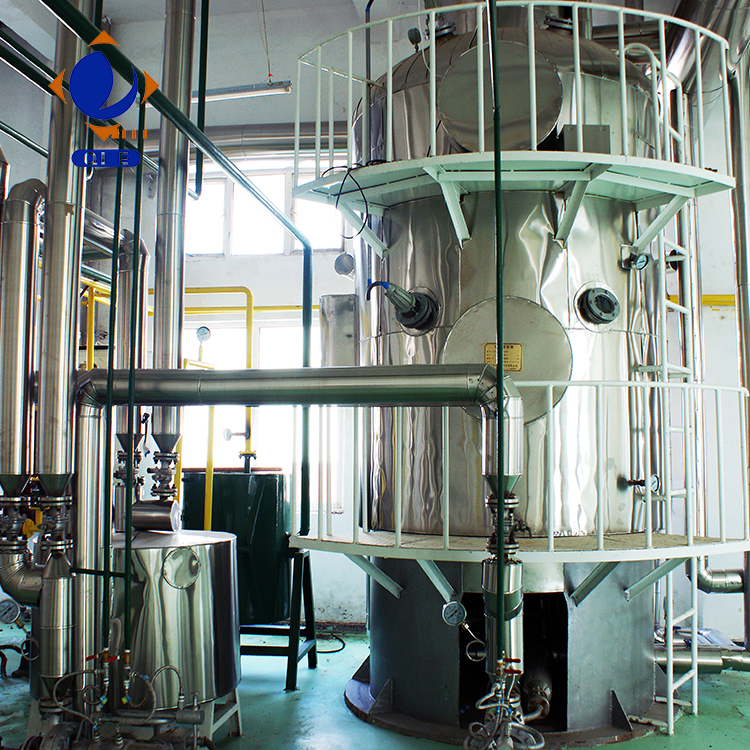
A vacuum oil filter uses negative pressure to pull sunflower oil through a filter medium, often supporting continuous or semi-continuous operation. In practical terms, the vacuum environment can help reduce dissolved gases and may assist in limiting oxygen contact during filtration, depending on tank and sealing design.
Typical strengths in commercial use
Stable clarity at moderate solids load: suitable when upstream settling/degumming keeps solids manageable.
Lower oxygen pickup potential: helpful for flavor-sensitive edible oil and export-bound packaged oil.
Operator-friendly: fewer plates to open; often quicker routine handling vs. manual plate & frame cleaning.
Consistent output for “everyday” grades: widely used where 5–20 μm is acceptable and appearance is the main KPI.
Practical limits to watch
Media dependence: performance varies significantly with cloth/paper grade and correct pre-coat practices (if used).
Very fine polishing may require a second stage: cosmetics-grade clarity often benefits from cartridge polishing (1–5 μm) after the main filter.
Vacuum system upkeep: seals, vacuum pump, and condensate handling should be included in maintenance planning.
3) How a Plate & Frame Filter Press Works (and Why Many Mills Keep It)
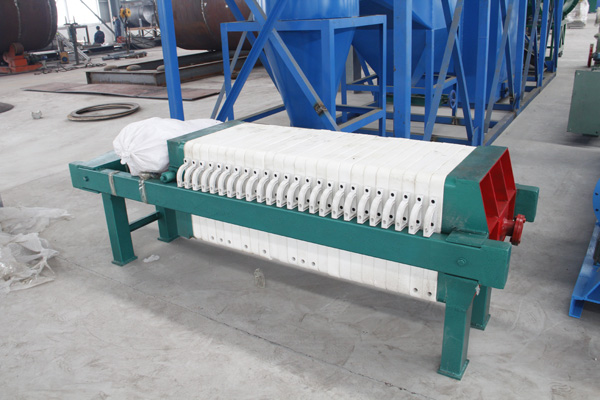
A plate & frame filter press pushes oil through filter cloths supported by plates. Solids accumulate as a cake. The technology is mature, widely serviceable, and especially valued where solids are higher or when tight filtration is required without complex auxiliary systems.
Typical strengths in commercial use
High solids handling: works reliably when crude oil carries more fines—common in small-to-mid mills.
Fine filtration capability: with proper cloth/pre-coat, 1–10 μm final quality is achievable in many configurations.
Predictable performance: ΔP rise is visible and actionable; operators can schedule cake discharge cycles.
Spare parts availability: plates, cloths, gaskets are generally accessible in most regions.
Practical limits to watch
Labor and downtime: opening the press, cake discharge, cloth washing—often the biggest “hidden cost.”
Footprint and safety: manual presses need space and disciplined SOPs to prevent hot-oil exposure and slips.
Batch nature: unless fully automated, continuous production lines may see flow interruptions.
The figures below are reference ranges commonly seen in sunflower oil lines (crude to semi-refined), assuming standard operating temperature bands of 45–70°C and typical viscosity. Actual results vary by upstream pretreatment, media, and operator discipline.
Key Metric
Vacuum Oil Filter
Plate & Frame Filter Press
Typical final particle rating
~5–25 μm (polishing stage may be added for 1–5 μm)
~1–10 μm with correct cloth / pre-coat
Clarity target feasibility
Good for bulk clarity; often <10–20 NTU achievable
Excellent for “polished” clarity; often <5–10 NTU achievable
Solids load tolerance
Moderate; best with upstream settling/centrifuge support
High; handles heavier fines and variable crude batches
Batch-friendly, robust for variable crude and higher solids
Most common buyer pain point
Under-sizing leads to slow flow and frequent media changes
Labor/downtime is underestimated in total cost
In practice, many plants adopt a hybrid logic: primary solids removal (settling/centrifuge) → main filtration (vacuum filter or press) → optional polishing (cartridge) for premium buyers.
5) Application Scenarios: Which One Matches Food, Cosmetics, and Small Workshops?
A) Foodservice & cooking oil (bulk, stable daily output)
When the goal is consistent clarity for drums/IBCs, and upstream processes already remove most fines, a vacuum oil filter often fits well—especially if the plant prioritizes smoother operation and fewer manual interventions. Typical selection triggers include stable crude batches, predictable solids, and tight staffing.
B) Cosmetics or premium ingredient buyers (polished appearance, tighter specs)
If buyers request low haze risk and finer particle control, the plate & frame filter press is frequently chosen for its ability to push toward 1–5 μm outcomes (with suitable media and practice). Many exporters then add a small polishing stage to protect final packaging lines and reduce customer complaints about sediment.
C) Small mills / workshops (high variability, higher solids, cost-sensitive)
For operations where crude oil quality swings by seed lot, pressing conditions, or seasonal changes, the filter press is often the safer “workhorse.” It tolerates heavier solids loads and can be expanded by adding plates. The trade-off is labor: cake discharge and cloth care must be treated as part of production, not as “extra.”
6) The Selection Decision Tree (Throughput × Oil Quality × Labor Cost)
The following decision tree is designed for fast internal alignment between operations, QA, and purchasing. It intentionally uses operational questions instead of brand/model names.
START
 │
 ├─ Q1: Is crude oil solids load frequently high/variable (visible fines, rapid haze)?
 │      ├─ YES → Choose PLATE & FRAME FILTER PRESS as main filtration
 │      │        └─ If target ≤ 5 μm or premium clarity → add CARTRIDGE POLISHING (optional)
 │      └─ NO  → go to Q2
 │
 ├─ Q2: Is the required final filtration typically ≤ 10 μm (premium buyers, cosmetics, export claims)?
 │      ├─ YES → PLATE & FRAME FILTER PRESS (or vacuum + polishing, if continuous line required)
 │      └─ NO  → go to Q3
 │
 ├─ Q3: Is labor cost high or operator availability limited (1 person/shift, minimal downtime)?
 │      ├─ YES → VACUUM OIL FILTER (prefer semi/continuous operation)
 │      └─ NO  → go to Q4
 │
 └─ Q4: Is continuous output critical (no batch interruptions accepted)?
        ├─ YES → VACUUM OIL FILTER (consider redundancy for peak season)
        └─ NO  → PLATE & FRAME FILTER PRESS (robust and expandable)
This model reduces “spec battles” by anchoring decisions to outcomes: stable quality, real throughput, and total operating cost.
7) Real-World Case Snapshots (What Changed After the Right Choice)
Case 1: Mid-size edible oil packer (stable crude, staffing constraints)
A regional packer processing ~30–60 tons/day of sunflower oil experienced recurring bottlenecks from manual cake discharge and cloth washing on a legacy press. Switching the main stage to a vacuum oil filter improved shift stability and reduced unplanned stops. QA reported more consistent clarity at the filler, while maintenance focused on planned vacuum system checks rather than reactive cloth issues.
Case 2: Export-focused supplier (premium clarity, tighter particle control)
An exporter supplying premium buyers targeted <10 NTU and tighter sediment control after long-distance shipping. A plate & frame filter press configured for finer filtration helped reduce customer complaints tied to “bottom-set” sediment. The team standardized cloth specs and implemented differential-pressure-based change intervals to keep results consistent across batches.
Case 3: Small mill (high solids, variable seeds)
A small producer faced frequent “slow flow” events due to solids spikes. By selecting a properly sized plate & frame filter press and aligning operating temperature to viscosity, the mill stabilized output and reduced re-filtering. The biggest improvement was procedural: defined cloth washing SOPs and operator training brought repeatable filtration performance without changing upstream equipment.
8) Buyer-Style FAQ (The Questions Procurement Teams Actually Ask)
What micron rating is “enough” for commercial sunflower oil?
Many bulk edible oil operations work well at 10–25 μm final filtration. Export, cosmetics, and premium ingredient channels often target 1–10 μm, especially when customer claims and long logistics increase sediment sensitivity.
Which option is safer against raw material variability?
A plate & frame filter press is generally more forgiving when solids fluctuate. It builds cake and continues working, while some vacuum systems can lose effective flow faster if media loads unexpectedly.
How should total cost be compared without using “price” as the main argument?
Compare operator hours per ton, consumables per ton (cloth/media/pre-coat), cleaning downtime per week, and rework rate (how often oil needs re-filtering). In many plants, labor + downtime outweigh energy by a wide margin.
Can both machines be justified in one line?
Yes. A common configuration is robust main filtration (often press) plus a small polishing stage for sensitive customers—or a vacuum filter for steady output plus polishing when needed. The best design depends on your “worst-week” crude quality, not your average week.
Get a Selection Recommendation Based on Your Output, Target Micron, and Labor Reality
If the decision still feels “too close to call,” the fastest way to avoid over-buying or under-sizing is to map three inputs: tons/day, target micron / clarity, and solids variability. With those, an engineering-grade recommendation can be made—including suggested filtration stages and maintenance rhythm.
Request a tailored sunflower oil filtration equipment match (Vacuum Filter / Plate & Frame Press)
Share your capacity, oil condition, and target quality—receive a practical configuration suggestion aligned with real plant operation. Powered by field experience and manufacturing perspective from 企鹅集团.
2026-03-06|417|sunflower seed dehulling equipment mid-scale sunflower oil production line sunflower oil process flow hot press vs cold press sunflower oil sunflower oil refining and filtration
2026-03-11|463|mid-scale sunflower oil production line sunflower seed dehulling and pressing hot press vs cold press sunflower oil sunflower oil refining and filtration automatic edible oil packaging machine








.jpg?x-oss-process=image/resize,h_300,m_lfit/format,webp)

.jpg?x-oss-process=image/resize,m_fill,h_400,w_400/format,webp)



.jpg)