Selecting an oilseed processing route is a fundamental decision for an oil mill project. Oil pressing and solvent extraction serve different feedstock conditions, production capacities, recovery objectives, and operating models. The right choice should be based on the complete processing requirement rather than on a single factor such as initial equipment investment or expected oil recovery.
Qi'e Grain and Oil Machinery Co., Ltd. supports oil processing businesses with equipment and technical solutions for oil pressing, solvent extraction, and edible oil refining applications. This guide outlines the practical considerations for choosing between cold pressing, hot pressing, and solvent extraction in an oilseed processing line.
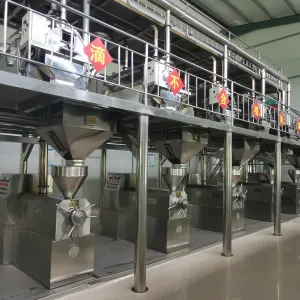
Oil pressing separates oil from prepared oilseeds through mechanical force. Depending on the material and product requirements, the process may include seed cleaning, cracking, conditioning, cooking, flaking, pressing, and oil clarification.
A pressing line may be configured for cold pressing, where processing conditions are controlled to limit heat exposure, or hot pressing, where suitable thermal preparation helps support pressing performance. The pressed oil and press cake can both require further handling according to the intended product and downstream use.
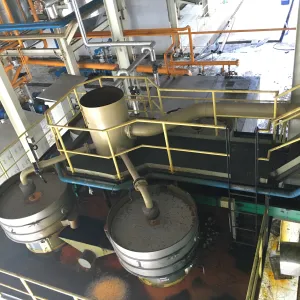
Solvent extraction is a process designed to recover oil from properly prepared oilseeds or oil-bearing press cake using an approved extraction solvent within a controlled system. The resulting oil-solvent mixture is subsequently separated and processed, while the extracted meal is treated to remove residual solvent before further use.
This route generally involves a more integrated system, including material preparation, extraction, solvent recovery, meal desolventizing, and process safety controls. It is typically evaluated where high oil recovery and sustained production capacity are key objectives.
| Selection Factor | Oil Pressing | Solvent Extraction |
|---|---|---|
| Primary recovery method | Mechanical separation by pressing. | Oil recovery through a controlled solvent-based process. |
| Typical project fit | Suitable for projects focused on mechanical processing, flexible line configurations, or specialty oil positioning. | Often considered for continuous, higher-capacity operations and recovery-focused production planning. |
| Feedstock condition | Requires preparation appropriate to seed type, moisture, cleanliness, and pressing characteristics. | Requires carefully prepared material and process control compatible with the extraction system. |
| System configuration | May include cleaning, preparation, pressing, filtration or clarification, and cake handling. | Usually includes extraction, solvent recovery, meal treatment, ventilation, monitoring, and safety-related systems. |
| Operational focus | Press condition management, material preparation, oil clarification, and equipment maintenance. | Integrated process management, solvent handling, recovery performance, safety procedures, and emissions control. |
| Downstream refining | May be selected based on crude oil quality, product specification, and market requirements. | Usually assessed as part of the wider crude-oil processing and finished-oil plan. |
Oilseed type is central to process selection. Oil content, kernel or seed structure, moisture level, impurities, shell content, storage condition, and desired oil quality can all affect the suitability of an oil pressing process or solvent extraction route. A process that is appropriate for one raw material may require a different preparation sequence for another.
For example, a project may use mechanical pressing as the principal recovery method, while another may evaluate pre-pressing followed by extraction when its production plan calls for a combined process arrangement. The preferred configuration should follow technical assessment of the feedstock and the plant’s operating objectives.
Cold pressing is generally considered where controlled processing temperatures and a mechanically expressed oil profile are important to the product concept. Equipment selection should account for the particular seed, material preparation, throughput requirement, and oil clarification arrangement.
Hot pressing uses preparation and conditioning steps suited to the pressing process. It may be considered where the selected oilseed and production plan benefit from a process sequence that supports mechanical oil expression.
Solvent extraction places greater emphasis on integrated plant engineering, closed-loop solvent recovery, operating discipline, and safety management. It should be planned with the applicable local standards, utility conditions, and environmental requirements in mind.
An oil mill is a connected processing system. The press or extractor is important, but project performance also depends on how material preparation, oil handling, by-product handling, utilities, controls, and refining are coordinated. A realistic selection review should include the following areas:
Oil pressing and solvent extraction produce crude oil that may require downstream treatment depending on its source, quality, storage plan, customer requirements, and intended market. Refining is not a separate afterthought; it is often an important part of the overall oil processing technology decision.
A complete edible oil refining configuration may be assessed in relation to degumming, neutralization, bleaching, deodorization, filtration, and other process stages appropriate to the specific oil and product objective. The required scope should be determined from the actual raw material and finished-product requirements rather than assumed as identical across all oilseeds.
Identify seed type, condition, oil-bearing characteristics, and supply consistency.
Clarify planned capacity, operating pattern, product route, and by-product strategy.
Assess pressing, extraction, or combined arrangements against project needs.
Match equipment, utilities, safety measures, refining needs, and site layout.
There is no universal answer to whether oil pressing or solvent extraction is the better option. Mechanical pressing may be appropriate for one oilseed, capacity range, or product strategy, while solvent extraction may be more suitable for another project with different recovery, scale, and process-control requirements.
Qi'e Grain and Oil Machinery Co., Ltd. can help evaluate the relationship between raw materials, process flow, equipment configuration, refining requirements, and plant operating conditions. A well-defined technical brief is the starting point for selecting an oil processing solution that aligns with your production plan.

 201
|
201
|
 Qi'e Grain and Oil Machinery
integrated grain and oil processing solutions
oil production line equipment
oil pressing equipment
edible oil refining equipment
Qi'e Grain and Oil Machinery
integrated grain and oil processing solutions
oil production line equipment
oil pressing equipment
edible oil refining equipment
 105
|
Qi'e Grain and Oil Machinery Co., Ltd.
grain and oil machinery equipment
oil pressing machinery
oil production equipment
edible oil refining complete line
103
|
Qi'e Grain and Oil Machinery
environmental upgrade
automation in grain and oil machinery
energy saving and consumption reduction
production consistency
105
|
Qi'e Grain and Oil Machinery Co., Ltd.
grain and oil machinery equipment
oil pressing machinery
oil production equipment
edible oil refining complete line
103
|
Qi'e Grain and Oil Machinery
environmental upgrade
automation in grain and oil machinery
energy saving and consumption reduction
production consistency
 387
|
Qi'e Grain and Oil Machinery Co., Ltd.
overseas grain and oil processing project
case analysis
equipment configuration
market adaptation
41
|
Qi'e Grain and Oil Machinery
edible oil production line
equipment selection
process configuration
pressing extraction refining
387
|
Qi'e Grain and Oil Machinery Co., Ltd.
overseas grain and oil processing project
case analysis
equipment configuration
market adaptation
41
|
Qi'e Grain and Oil Machinery
edible oil production line
equipment selection
process configuration
pressing extraction refining