When it comes to sunflower oil production at a small scale, efficiency and cost-effectiveness are crucial. The question often arises: how do you ensure your equipment matches your production targets without locking capital into inefficient machinery? This guide helps you evaluate small sunflower oil mills primarily by their hourly processing capacity, providing a clear framework to optimize your investment return rate (ROI).
Your process typically begins with seed cleaning, followed by dehulling, pressing, and ends with filtering to obtain pure oil. Each stage impacts overall throughput and product quality. For beginners, mastering this sequence lays the foundation for efficiency improvements.
| Production Stage | Function | Key Customer Focus |
|---|---|---|
| Cleaning | Removes impurities to protect machinery and oil quality | Newcomers focusing on basic understanding |
| Dehulling | Separates hulls to improve pressing efficiency and oil purity | Medium-scale users optimizing capacity and labor cost |
| Pressing & Filtering | Extracts oil and ensures clear, contaminant-free product | Large enterprises prioritizing integration and long-term operation efficiency |
Your equipment's hourly processing volume directly influences revenue and profitability. For a small-scale sunflower oil mill, typical capacities range from 50 kg to 150 kg per hour. Consider this along with the oil yield rate, which normally falls between 35% and 50% depending on seed quality and press technology.
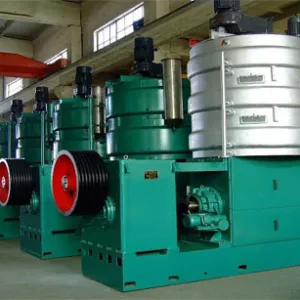
Selecting a machine with the right balance between capacity and automation level is key. Semi-automatic presses usually process about 60-80 kg/hour, while fully automatic ones can reach 120-150 kg/hour, significantly reducing manual labor and operational errors.
Semi-Automatic Press: ~480-640 kg/day (8-hour operation)
Fully Automatic Press: ~960-1,200 kg/day (8-hour operation)
The material of your pressing equipment significantly affects durability and hygiene compliance:
Investing in stainless steel equipment pays off in reduced downtime and better product trustworthiness, especially when targeting discerning international buyers.
| Feature | Stainless Steel | Carbon Steel |
|---|---|---|
| Corrosion Resistance | High | Low |
| Hygiene Compliance | Excellent | Poor |
| Maintenance Frequency | Low | High |
| Initial Cost | Higher | Lower |
Real-world production frequently suffers from inconsistent seed quality—a chief cause of output fluctuation. Lower-grade seeds may reduce oil extraction efficiency below the stated 35%-50% range, affecting profitability.
For reliable decision-making, factor in seed sourcing stability and consider pilot testing your chosen equipment with your actual raw materials. This foresight avoids costly surprises and waste.
To maximize ROI, weigh all three factors simultaneously:
Investing in a higher upfront cost semi-automatic or fully automatic machine constructed from stainless steel typically results in 20-30% higher net production efficiency over two years compared to cheaper alternatives.
Your production line currently struggling with bottlenecks or equipment mismatches? Share your experiences or questions by leaving a comment below — let's explore practical solutions together to boost your sunflower oil yield and profitability.
Discover High-Efficiency Small Sunflower Oil Press Equipment Now