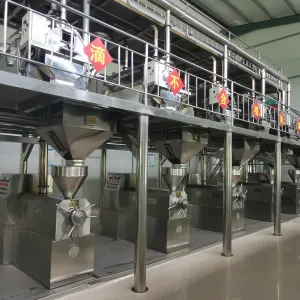
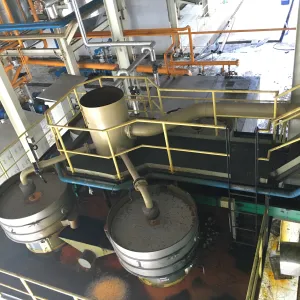
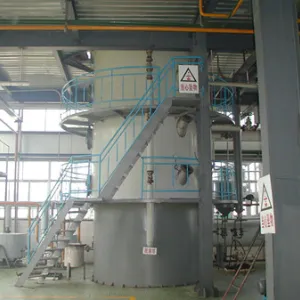
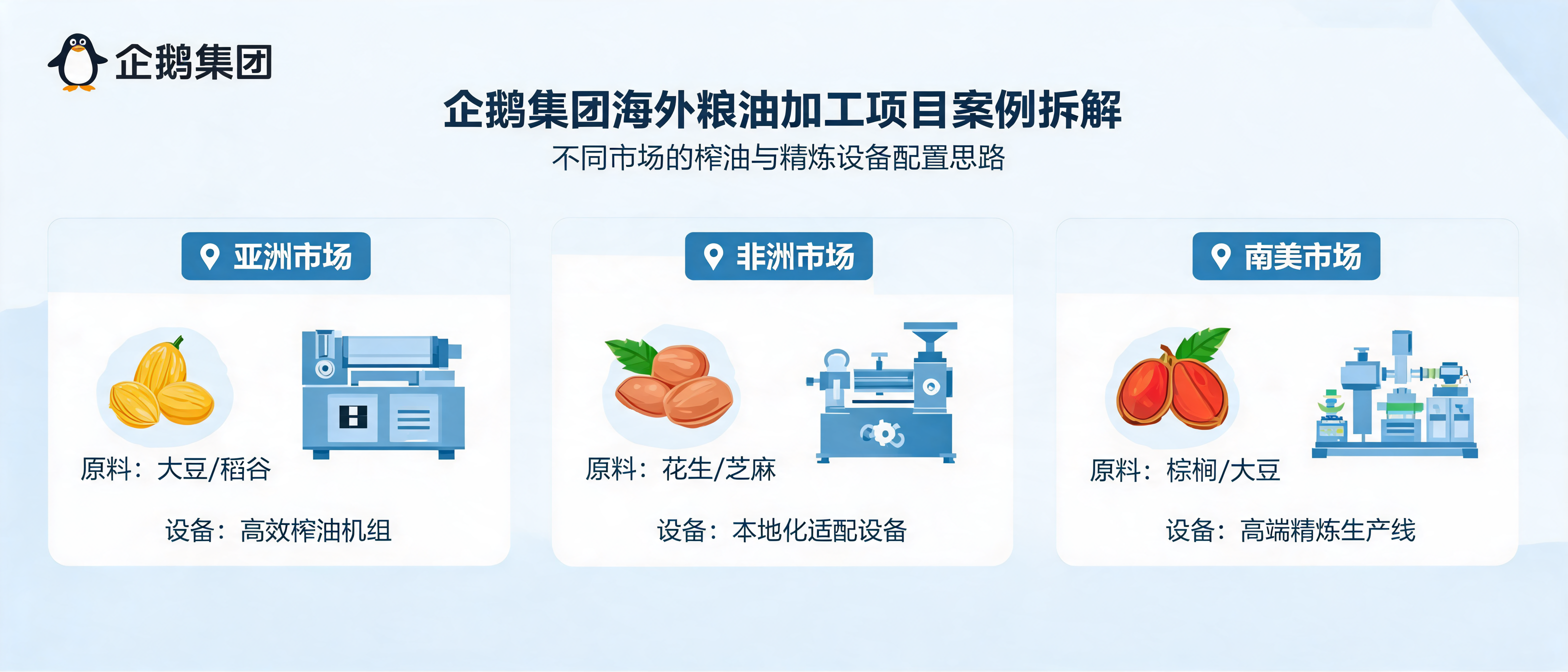
Planning an edible oil production line starts with a clear understanding of the raw material, the intended processing route, and the required finished-oil quality. From oilseed receiving and pretreatment to pressing or solvent extraction, crude oil handling, and refining, each stage should be selected as part of one connected process rather than as isolated equipment.
Qi'e Grain and Oil Machinery Co., Ltd. supports B2B customers in evaluating practical equipment configurations for soybean, palm, palm kernel, sunflower seed, and other oil-bearing materials. A suitable line should match material characteristics, planned capacity, site conditions, operating requirements, and the desired scope of oil refining.
Before selecting oil production line equipment, define what the facility is expected to process and deliver. The same production objective can require different equipment arrangements depending on whether the operation handles one oilseed or several materials, produces crude oil or refined edible oil, and serves local processing, commercial supply, or further industrial use.
Identify the oil-bearing materials to be processed, their expected condition, moisture level, impurity content, and supply consistency.
Clarify whether the target product is crude oil, filtered oil, or refined edible oil with defined quality and appearance requirements.
Determine planned throughput, operating hours, automation expectations, utility availability, and future expansion considerations.
Oilseeds differ in structure, oil content, shell or hull proportion, impurity level, and response to heat and mechanical treatment. These differences affect the pretreatment sequence and the choice between mechanical pressing, solvent extraction, or a combined approach. Equipment planning should therefore begin with material evaluation rather than with a fixed machine list.
| Planning Factor | Why It Matters | Typical Equipment Consideration |
|---|---|---|
| Impurities and foreign matter | Can affect equipment reliability, oil quality, and downstream processing stability. | Cleaning, screening, and removal of unwanted materials before processing. |
| Hull, shell, or kernel structure | Influences preparation efficiency and the need for separation before oil recovery. | Dehulling, shelling, cracking, or kernel preparation where appropriate. |
| Moisture and storage condition | Affects material flow, conditioning, pressing behavior, and process control. | Drying, conditioning, and controlled storage arrangements as required. |
| Oil recovery route | Determines the principal production section and supporting systems. | Oil pressing equipment, solvent extraction equipment, or an integrated process route. |
An edible oil production line is generally planned as a sequence of coordinated sections. The exact configuration depends on the selected oilseed and processing objective, but the following structure provides a practical framework for discussing equipment needs.
Pressing and solvent extraction are not interchangeable decisions. The appropriate route should be evaluated against the raw material, planned scale, product objective, available utilities, site conditions, and the overall production process. In some line designs, pretreatment and mechanical pressing form the primary production section; in others, extraction is incorporated as part of a broader oil recovery arrangement.
Refining should not be treated as an afterthought. The condition of the crude oil and the expected finished-oil specification influence the refining equipment scope, process sequence, tank arrangement, piping design, and operational controls. Early definition helps connect the oil production section with the final product requirement.
Planning principle: Evaluate oilseed pretreatment, oil pressing or solvent extraction, and edible oil refining as linked process sections. This approach helps ensure that upstream material preparation and oil recovery are aligned with downstream oil quality objectives.
Target capacity is important, but it should be assessed together with the physical and operational conditions of the proposed facility. A workable configuration considers the movement of raw materials, intermediate products, crude oil, finished oil, and maintenance access throughout the plant.
Review building dimensions, equipment positioning, material routes, access areas, and the practical relationship between process sections.
Confirm the availability and planning needs for power, water, heating, ventilation, and other utilities relevant to the selected process.
Plan receiving, storage, conveying, oil collection, meal or residue handling, and finished-oil storage as part of the operational flow.
Where relevant, consider whether the layout can accommodate additional processing capacity or complementary equipment in the future.
Providing clear project information makes it easier to discuss a practical edible oil production line configuration. The following items are useful during initial planning:
Effective edible oil production line planning links raw material preparation, oil recovery, crude oil treatment, and refining into a coherent operating system. The equipment selection should be based on the project’s actual materials, production goals, and plant conditions—not on a one-size-fits-all configuration.
As a supplier of oil pressing equipment, oil production line equipment, and edible oil refining equipment, Qi'e Grain and Oil Machinery Co., Ltd. can support project discussions with a focus on process compatibility, equipment coordination, installation needs, and technical service requirements.

 403
|
403
|
 Qi'e Grain and Oil Machinery Co., Ltd.
oil press procurement
oil processing equipment selection
oil press capacity evaluation
oil machinery after-sales service
236
|
Qi'e Grain and Oil Machinery Co., Ltd.
equipos de maquinaria para cereales y aceites
equipos de prensado de aceite
línea de producción de aceite
refinado de aceite comestible
Qi'e Grain and Oil Machinery Co., Ltd.
oil press procurement
oil processing equipment selection
oil press capacity evaluation
oil machinery after-sales service
236
|
Qi'e Grain and Oil Machinery Co., Ltd.
equipos de maquinaria para cereales y aceites
equipos de prensado de aceite
línea de producción de aceite
refinado de aceite comestible
 216
|
sunflower seed oil production equipment
process compatibility assessment
capacity matching
equipment maintenance ease
equipment procurement guide
345
|
Qi'e Grain and Oil Machinery
edible oil refining equipment
refining process
operating essentials
equipment maintenance
171
|
Qi'e Grain and Oil Machinery
edible oil refining
degumming and deacidification
decolorization and deodorization
process configuration
216
|
sunflower seed oil production equipment
process compatibility assessment
capacity matching
equipment maintenance ease
equipment procurement guide
345
|
Qi'e Grain and Oil Machinery
edible oil refining equipment
refining process
operating essentials
equipment maintenance
171
|
Qi'e Grain and Oil Machinery
edible oil refining
degumming and deacidification
decolorization and deodorization
process configuration