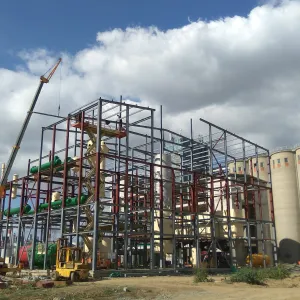
For mid-sized sunflower oil producers, labor costs are one of the most significant variables affecting profitability—especially when scaling operations. A recent case study from a 15-ton-per-day facility in Ukraine shows that switching from semi-automatic to fully automated grinding equipment reduced daily labor requirements by up to 40%, while increasing throughput by 22% and improving oil yield consistency.
In traditional setups, operators must manually load seeds, monitor temperature zones, adjust pressure settings, and clean residues—a process prone to human error and inefficiency. An automated sunflower oil grinding machine integrates multiple stages: pre-heating, crushing, pressing, and filtration—all under centralized control.
| Feature | Semi-Automatic | Fully Automated |
|---|---|---|
| Daily Operator Hours | 6–8 hrs | 2–3 hrs |
| Avg. Daily Output | 12 tons | 14.7 tons |
| Energy Consumption per Ton | 18 kWh | 15 kWh |
These improvements aren’t just theoretical—they reflect real-world performance at a plant near Kharkiv, where staff reported fewer fatigue-related errors and better compliance with food safety standards (like HACCP). The use of stainless steel components also minimized contamination risks, which is critical for export markets such as the EU and GCC countries.
The durability of internal parts directly impacts maintenance frequency and downtime. High-grade AISI 304 stainless steel used in modern automated grinders resists corrosion and wear—even after years of continuous operation. This translates into lower long-term operational costs compared to carbon steel alternatives commonly found in budget models.
Moreover, automated systems often include predictive maintenance alerts via IoT sensors, allowing facilities to schedule repairs during off-peak hours without disrupting production flow. For many mid-sized processors, this level of foresight has cut unplanned downtime by over 30%.
Pro Tip: When evaluating an automated sunflower oil grinding machine, don't just look at the price tag—ask about integration capabilities, ease of cleaning, and how well it aligns with your current workflow. A good fit will pay dividends beyond labor savings.
If you're managing a mid-sized oil processing unit and wondering whether automation makes sense for your operation, we’d love to hear your experience—or your biggest challenge right now. What’s holding you back from upgrading? Let us know in the comments below—we’re listening.
Explore Our Fully Automated Sunflower Oil Grinding Solutions